
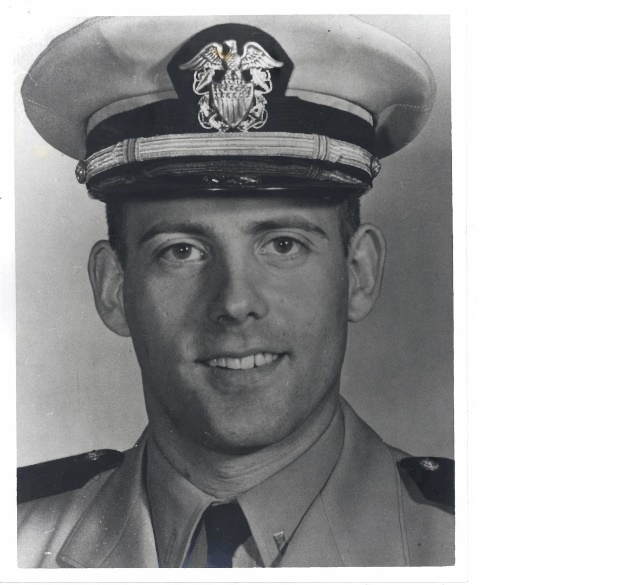
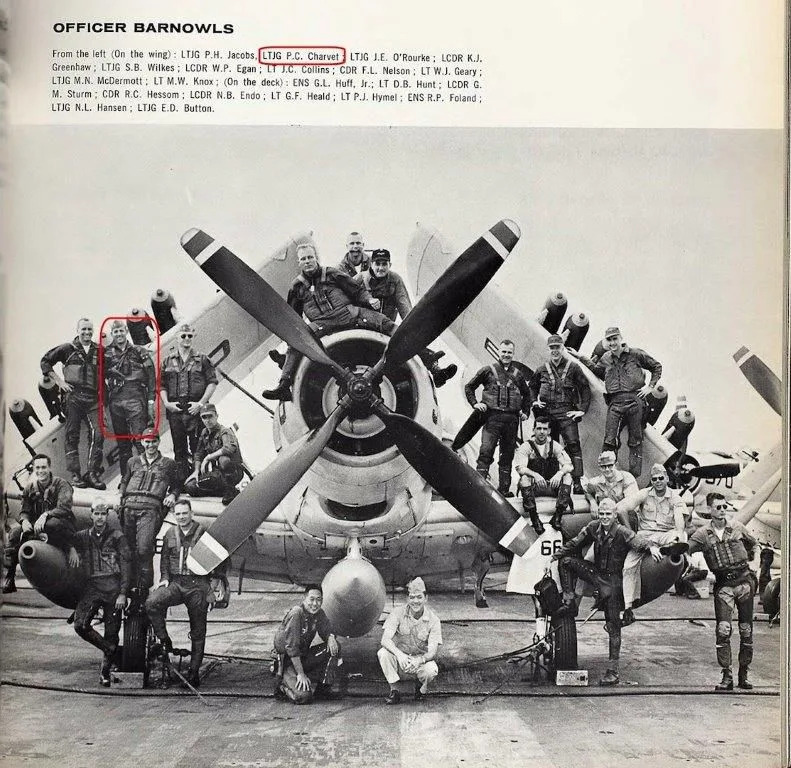
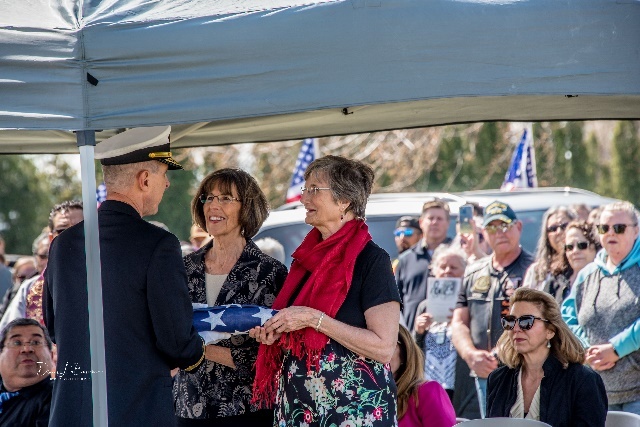
On March 21, 1967, Lieutenant Paul Charvet, a U.S. Navy pilot, catapulted off the deck of the USS Bon Homme Richard in a single seat, A-1H Skyraider airplane. The Commanding Officer of Attack Squadron 215 tried to get Lieutenant Charvet not to fly the mission that day and to accept a replacement. This was his last scheduled flight at the end of his third tour in Vietnam. He was heading home soon. Lieutenant Charvet refused and insisted on flying the mission himself. He loved to fly. He planned for this tour to be his last with the Navy. He had accepted a civilian job with a commercial airline. He and his wife were going to start a family.
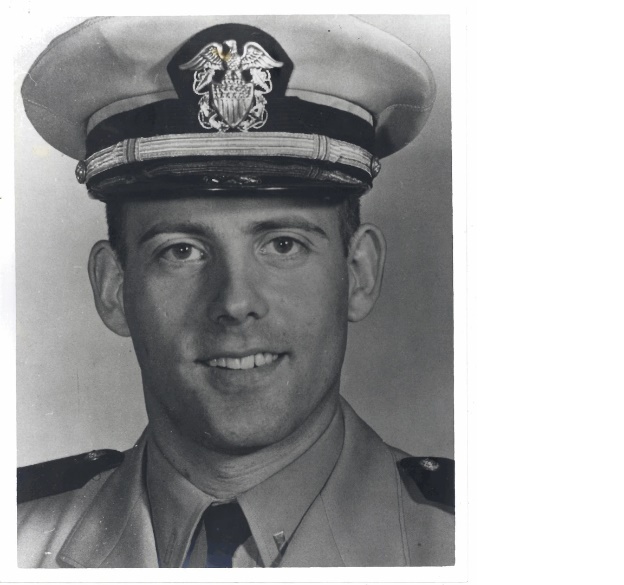
Paul launched off the warship with two other Skyraider aircraft on a mission to direct naval gunfire. He flew into low clouds near Hon Me Island, Thanh Hoa Province, and disappeared. Gone – without a trace. The next day, Radio Hanoi claimed they shot down an American plane the previous day. His plane was the only one missing. The Navy notified the family that Lieutenant Charvet was MIA – Missing in Action. Instead of enjoying the homecoming that they had planned, Paul’s family grieved an ambiguous loss.
_charvet_is_pictured_in_the_red_box._photo_courtesy_of_dona_re__s.png)
According to Pauline Boss, a psychotherapist, Professor Emeritus at the University of Minnesota and a Fellow in the National Council on Family Relations, ambiguous loss is incomplete or uncertain loss.[1] It is “an unclear loss with no official verification of life or death, and thus, no closure.”[2] In other words, ambiguous loss is having a loved one or friend absent but not clearly dead. It is a prolonged condition that induces trauma and paralysis rather than a single incident that subsequently causes flashback effects.[3] It ruptures relationships as one knew them and oftentimes has limited or no resolution. Without meaningful intervention, ambiguous loss can last a lifetime. Military chaplains are well positioned to both recognize and care for ambiguous loss. I examine how chaplains might understand and respond to ambiguous loss in whatever form it takes.
Understanding Ambiguous Loss
Ambiguous loss comes in two forms. In the first type, a family perceives a person to be physically absent but psychologically present. That is the type of ambiguous loss Lieutenant Charvet’s family felt, as do other families of MIAs. This type of pain is also experienced by families of kidnapped, abducted, or runaway children, individuals whose friend terminate their friendship without explanation, and people who are unaccounted for due to natural disasters (e.g., tsunamis, earthquakes, storms) or human-made incidents (e.g., plane crashes, shipwrecks, explosions). Additionally, it can occur when children leave home or with an estranged child. It also applies to people who leave their families and emigrate to another country without the ability to return.
In the second type of ambiguous loss, a person is physically present but psychologically absent or emotionally unavailable. Examples of this type of ambiguous loss include families dealing with a person with dementia, Alzheimer’s disease, or suffering from a traumatic brain injury, a comatose person, a person with addiction issues, mental illness, or even breakups or divorce. The person is present but the person that one remembers is gone. I had a friend who had a wife with Alzheimer’s disease. When she died, I expressed my sympathy for his loss. He looked at me and sadly commented, “we lost her a long time ago.” He certainly suffered from ambiguous loss during the years when his wife did not recognize anyone.
What makes the first type of ambiguous loss so difficult is that the loss is unclear, uncertain, and mysterious. There is a lack of information and lack of evidence that the loss actually occurred. There is no body or any physical proof of what happened to the person as to whether they are dead or alive. There is no official verification or death certificate. Religious rites and rituals, such as funerals or the scattering of cremains, play a crucial role in helping a family to accept that a loss has occurred, that the person is really gone, and signals that they must move on with new roles. With ambiguous loss such meaningful and tangible expressions are also missing. This creates a psychological block, hindering the ability to move forward in the grief process. Without proof, the grieving continues indefinitely.[4] The situation does not allow for detachment that lets a person reorganize family roles and rules and find some measure of closure. Without clarity, people cling to the status quo.[5] They cling to the last known roles of when the missing family member was present.
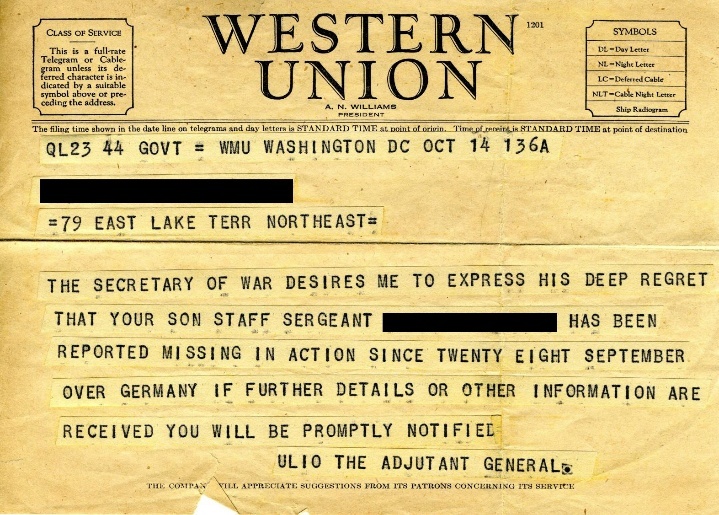
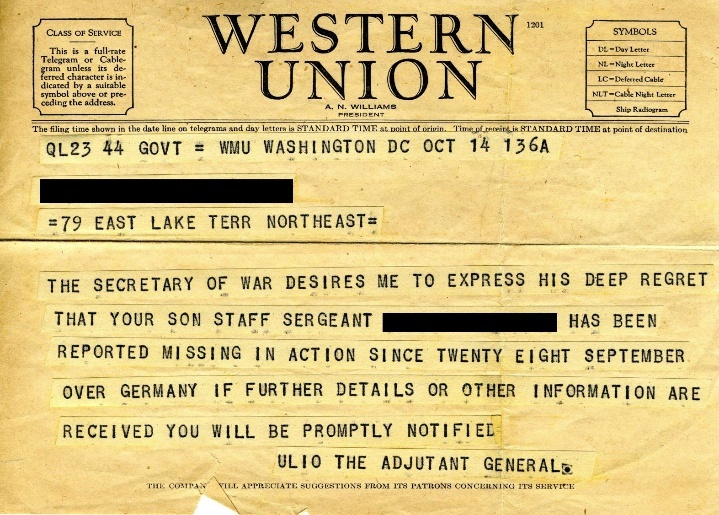
During World War II, families often received a telegram from the War Department informing them that their loved one was “missing in action,” with minimal additional details. Often, there was no other official notification. Later, perhaps many months or even years, the families received another telegram stating that their service member was “missing in action and presumed dead,” with little additional information. Families want to know what happened. They want answers to fill in the gaps in knowledge. Without that knowledge, they fill in the gaps with possible scenarios, no matter how unlikely they are. Is he or she really dead? Could they be somewhere else? Families remain paralyzed in the grieving process.[6]
Caring for Ambiguous Loss
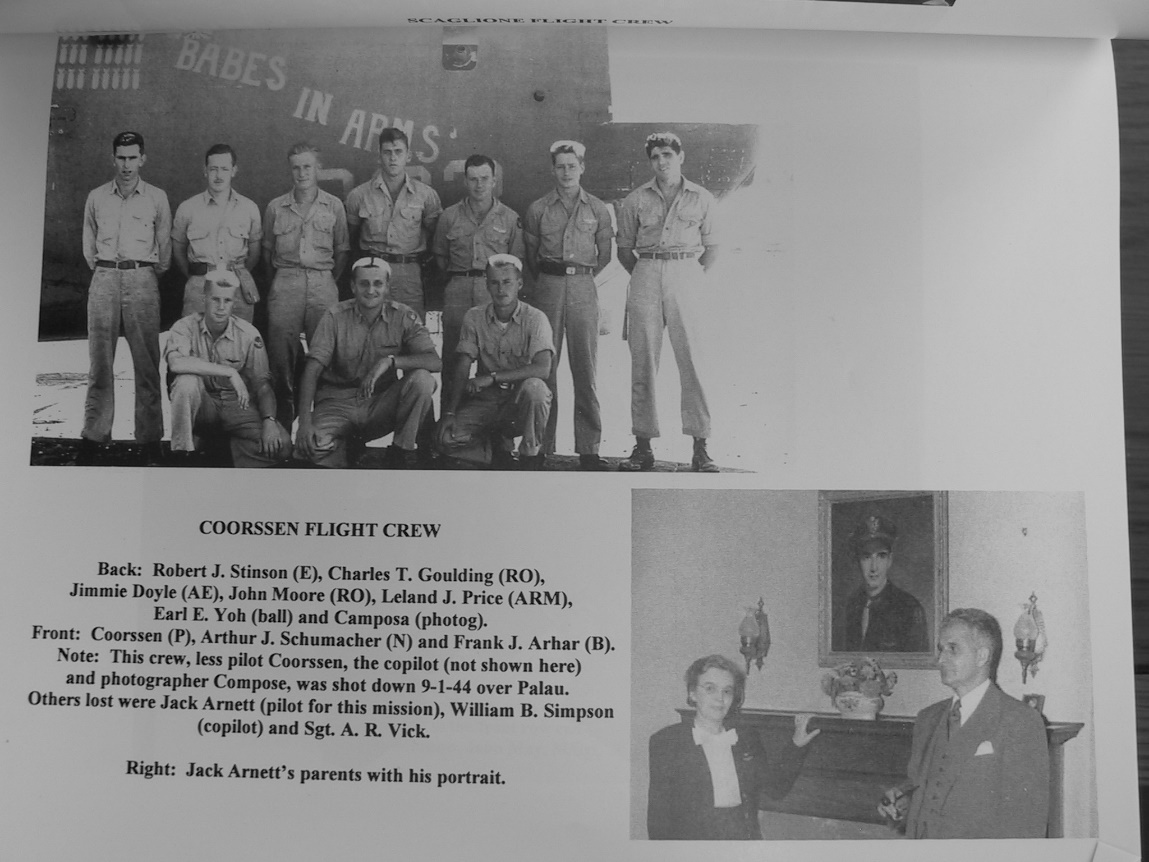
Coping with ambiguous loss is difficult at best and debilitating at worst. Many family members found help through talking with other families who were experiencing an MIA service member or a similar loss. Wil Hylton notes how several families shared letters with each other. They found strength and encouragement knowing that they were not alone.[7] Dona Re’ Shute, the sister of Lieutenant Paul Charvet, said she, her sister, and her mom could talk about Lieutenant Charvet when they were alone together. They helped each other cope in a healthy way. However, she said her father refused to talk about it. The family had an understanding that they did not talk about Paul around their father. He became an alcoholic, and it was only after many years that he regained his sobriety and reintegrated Paul’s memory back into the family. John Moore, B-24 crewmember Johnny Moore’s father, grieved so intensely that he refused to eat, could not sleep, and his body began to fail. He eventually went blind.[8]
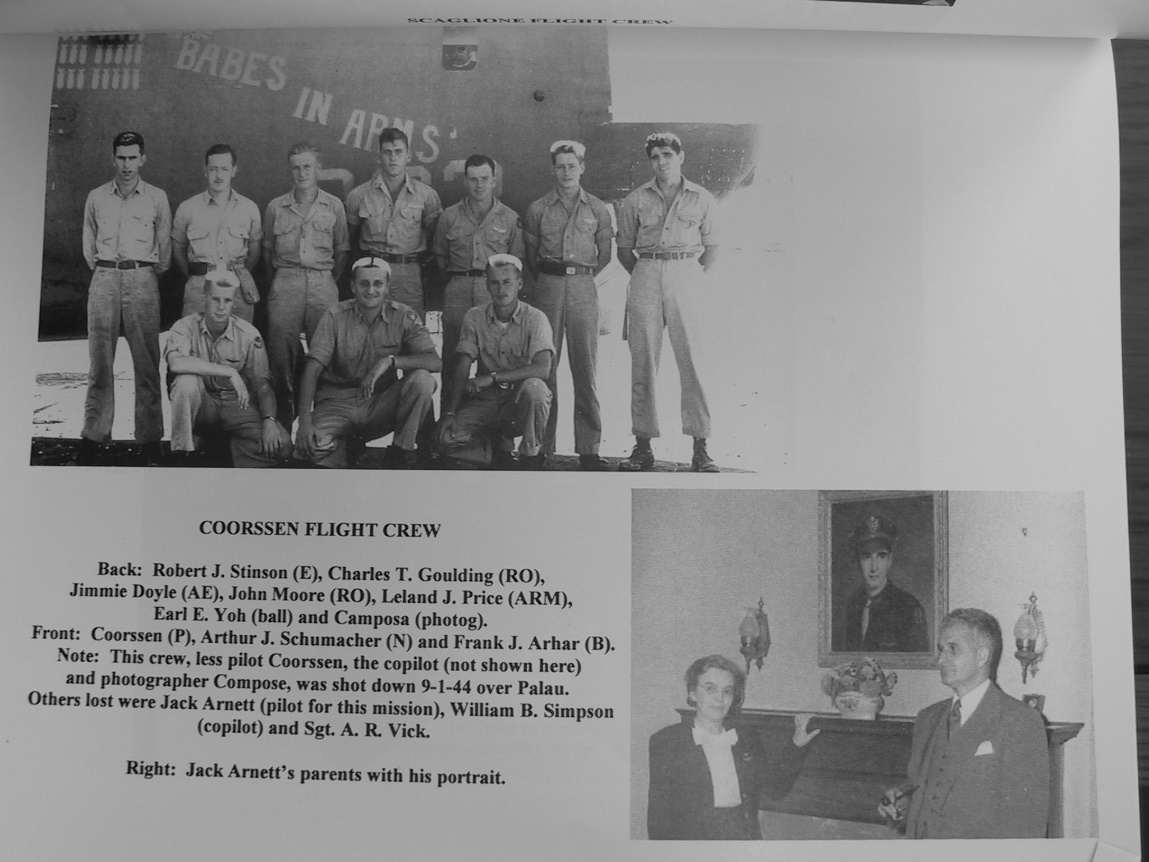
Those suffering ambiguous loss hold on to any hope no matter how small or unlikely. Shute said that she and her family hung on to any tidbit of information they could get. “It didn’t come often,” she said, “but it brought hope.” The family had accepted that Paul had died. Their hope was that his remains would be found. She said she was thankful to know that the Navy had not given up but was still looking for him.[9] Sometimes, the hope that one holds on to is not rational or helpful. Jimmie Doyle was a crewmember on a B-24 Liberator bomber, stationed in the western Pacific Theater of World War II. His plane was shot down near Palau on September 1, 1944. Witnesses saw three parachutes from the plane, a plane which had an 11-person crew. The sighting of the parachutes gave families hope that perhaps their loved one had survived.[10] Doyle’s brothers, for whatever reason, told Jimmie’s son, Tommy, that Jimmie had survived, was living in California, had remarried, and had a new life.[11] This certainly was not helpful nor was it true. The wife of another missing B-24 Liberator crewmember responded: “I always thought he might come home. I thought he had amnesia. I thought he was going to remember who he was.”[12] The mind naturally looks for hope, even if it is unreasonable. Other families of the B-24 crew said they believed that their loved one was still alive and stranded on an island. These are common stories among MIA families.[13]
Boss says the key to coping with ambiguous loss is to avoid feeling helpless. Some join support groups with others who have faced similar losses. Others choose to become activists in the name of those they lost. They funnel their energy into doing what they can and trying to accept what they cannot change.[14] This is a tenet of Stoicism, a philosophy which some people find immensely helpful.[15] It is also a part of Reinhold Niebuhr’s Serenity prayer:
God, grant me the serenity to accept the things I cannot change,
the courage to change the things I can, and the wisdom to know the difference.
Living one day at a time, enjoying one moment at a time.
Accepting hardships as the pathway to peace.
Taking, as He did, the sinful world as it is, not as I would have it.
Trusting that He will make all things right if I surrender to His will;
that I may be reasonably happy in this life, and supremely happy with Him forever.[16]
Dealing with ambiguous loss can be challenging, and spirituality can play a significant role in coping with it. Boss says that “our tolerance for ambiguity is related to our spiritual beliefs and cultural values, not just to our personality.”[17] She argues that faith tempers the need to find definitive solutions. Possessing a firm set of spiritual beliefs can serve as a guiding force for navigating through the complexities of life, especially in situations where definitive answers cannot be easily found. Faith can help individuals manage their emotions and avoid being overwhelmed by uncontrollable circumstances, which can be particularly challenging for those who lack a solid foundation of spiritual beliefs.
Many individuals derive a sense of inner strength and tranquility through their spiritual convictions. The notion that a higher power is present with them and that they are not alone can instill a deep sense of trust and comfort. Such faith is stronger than belief or hope.[18] While there may be individuals who harbor doubts regarding the validity of such beliefs, for those who hold them dear, it can serve to reduce their anxiety and gain solace.[19] To put it differently, individuals who possess a greater capacity to embrace and understand the inexplicable and unknown are able to handle such situations with more ease and grace. They are better able to accept the mystery.
This is an area where chaplains and spiritual leaders can be most effective, not by providing answers but by guiding the grieving in their faith journey to find meaning in ambivalence. As a caregiver, it is crucial to recognize that individuals experiencing ambiguous losses will each have their own unique ways of coping with the contradictions associated with their loved one’s absence or presence. The responsibility of caregivers is to support their efforts to find meaning in their loss, so long as their solutions are safe, regardless of where that may lead.[20]
To equip chaplains and caregivers with effective strategies, scholars have identified six key coping pillars to address ambiguous loss.[21] These are:
1. Finding Meaning – Those grieving ambiguous loss make sense of the loss and finding a new purpose. Those grieving ambiguous loss must give up on absolute thinking and accept the paradox. There may still be meaning in the meaningless. Perhaps one can find meaning in spiritual or family rituals. Boss suggests that the way to begin to find meaning is to give the experience a name – ambiguous loss. By naming it, those grieving ambiguous loss can start to accept that they are not to blame. This starts the process of making sense of the senseless.
2. Adjusting Mastery. Those grieving ambiguous loss come to recognize the degree of control they have. They begin to focus on what they can control (have mastery over) and be less anxious over what they cannot control. Depending upon their cultural and religious beliefs, they can internalize mastery through prayer, meditation, mindfulness, physical activity, etc.
3. Reconstructing Identity. Those grieving ambiguous loss come to understand their new identity and adjust to fill the roles of the missing person. These are the common roles that a family member does, such as mowing the grass or making financial decisions or shopping for groceries. With a family member missing, the other members must assume these roles. Have any boundaries changed? Boundaries are what family members understand as prohibited and not prohibited. These can be relational, religious, or cultural. Caregivers can encourage the person to reflect on who they are now that a loved one has disappeared. Who in the family is supportive or non-supportive? Who has become like family to you? Being able to shift, that is, to take on the missing person’s roles and to adjust friendships according to who is supportive, is essential for resilience.
4. Normalizing Ambivalence. Those grieving ambiguous loss come to terms with conflicting feelings. When a person does not know if a missing loved one is alive or dead, they often wish for the ambiguity to be over. They then may realize that means wishing the person were dead. This leads to ambivalence and guilt for having that thought in the first place. Talking with someone, perhaps a professional counselor or chaplain, can help them navigate the ambiguity. Caregivers can help them understand that the ambiguity occurred because of an external social rupture, not a psychiatric problem.
5. Revising Attachment. Those grieving an ambiguous loss may feel confused as to how they are attached to the missing person. Are they connected or not? Revisiting attachment means recognizing that a loved one is both here and gone. He may be dead and may not be. She may come back to the way she used to be and may not. It involves developing the ability to hold two opposing ideas simultaneously. This allows those grieving ambiguous loss to maintain their internal relationship with the missing one and to invest emotional energy into new relationships and connections at the same time.
6. Discovering New Hope. Those grieving ambiguous loss may discover something new to hope for and not focus solely on the missing person. Often, the new hope is to help other people avoid suffering from ambiguous loss as intensely as they did, or, at a minimum, offer support so that others do not endure it in isolation. This hope may be to help change laws or policies that would reduce the possibility of the same event happening to someone else. It may be to do something that the missing person would have wanted, like starting a charity. Hope does not end the suffering but rather helps those grieving to move forward despite the pain.
The Need for and Challenge of Finding Closure
Ambiguous loss is a natural phenomenon that can be particularly challenging for families. It leaves them uncertain and vague, which can be difficult to cope with. I played a role in providing funeral honors for fifteen MIA service members. I observed firsthand the ongoing suffering of their families, even after many years had passed since the loss of their loved ones. I noticed little to no difference in the intensity of grief between the families of those lost in WWII and those of the Vietnam era. Many of the grieving family members had never met their deceased relatives and only knew them through stories shared by other family members. The funeral ceremony provided a sense of peace and solace for these families. The military, through the Defense POW/MIA Accounting Agency (DPAA), is still repatriating MIA warriors regularly.
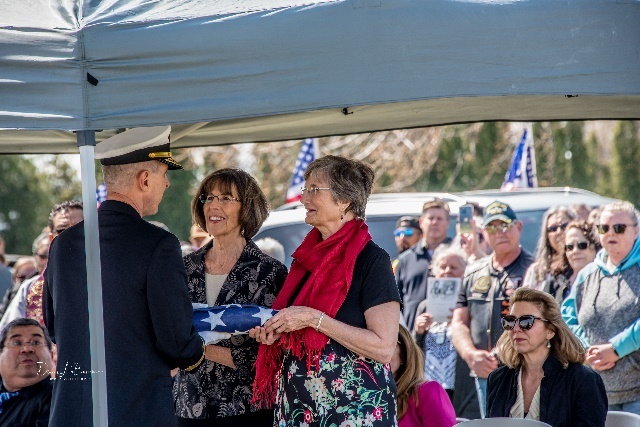
Finding and returning an MIA is nearly the only way for a family member to find true closure. On December 2, 1977, over ten years after LT Charvet was shot down, the Navy changed Paul’s status from “Missing in Action” to “Presumed Killed in Action,” and he was posthumously promoted to Commander. The family then had a memorial Mass so that they could get closure. According to Shute, they even buried “something” at the Mabton Cemetery in Mabton, Washington, but she could not remember what.[22]
In May 2021, Shute received a phone call from her sister, Lorraine. Lorraine told her that Paul had been found and identified. On April 14, 2023, the family had a memorial Mass in Grandview, Washington, and a graveside service in Mabton, Washington. Commander Charvet received full military honors and a flyover. Shute said she thought she had found closure in 1977, but what she experienced with bringing Commander Charvet home was true closure. She admitted that she did not know how badly she needed it. It brought her unspeakable peace and relief.
As noted above, ambiguous loss is not confined to wartime MIAs. Carol Freund, a clinical psychologist who works with victim family members and is a 9/11 victim family member herself, notes that there is a significant difference in the way families of those killed in the attacks on September 11, 2001, grieve, between those who have evidence of loss and the those who do not. She says having evidence is monumental in terms of how a family processes the death. Out of the 2,753 victims who perished in New York on September 11 there remains no evidence, including DNA evidence, for 1,103 individuals. Those that have evidence are considered “the lucky ones,” she says.[23] I have personally seen how much harder the families without evidence seem to struggle. The emotions can still be raw, even after the passing of decades.
Conclusion
Ambiguous loss is a profound and challenging experience that affects many families, particularly those of MIAs. The lack of closure and unmistakable evidence make the grieving process difficult and prolonged. Through coping mechanisms such as support groups, spiritual beliefs, and the six key coping pillars, individuals can find ways to manage their emotions and find meaning in their loss. True closure often comes from finding and returning an MIA, providing peace and relief to the families. Caregivers and chaplains play a vital role in assisting families with understanding ambiguous loss and helping them find ways to achieve a sense of peace and resolution.
Pauline Boss, Ambiguous Loss (Cambridge, MA: Harvard University Press, 1999), 3.
Pauline Boss, “Families of the Missing: Psychosocial Effects and Therapeutic Approaches,” International Review of the Red Cross (2017): 519.
Boss, Ambiguous Loss, 24.
Wil S. Hylton, Vanished (New York: Riverhead, 2013), 100.
Boss, Ambiguous Loss, 30.
Boss, Ambiguous Loss, 10.
Hylton, Vanished, 222.
Hylton, Vanished, 222-23.
Phone conversation with Dona Re’ Shute, March 25, 2024.
The Japanese quickly captured these three crewmembers and executed them.
Hylton, Vanished, 263.
Hylton, Vanished, 221.
Hylton, Vanished, 240.
Boss, Ambiguous Loss, 116.
See Marcus Aurelius, Meditations, Book 9, Section 6.
Reinhold Niebuhr, “Serenity Prayer,” Archdiocese of Saint Paul and Minneapolis, https://www.archspm.org/faith-and-discipleship/prayer/catholic-prayers/the-serenity-prayer/.
Boss, Ambiguous Loss, 18.
Greg Wark and Ray Rodriguez, The Warfighter’s Soul: Engaging into the Battle for the Warrior’s Soul (Savage, MN: Broadstreet, 2022), 57.
Boss, Ambiguous Loss, 123.
Boss, Ambiguous Loss, 136.
Boss, “Families of the Missing,” 530-534. Similar principles are found in Marilyn A. Mendoza, “Ambiguous Loss: How to Live with the Pain of Uncertainty,” Psychology Today, September 5, 2017, https://www.psychologytoday.com/us/blog/understanding-grief/201709/ambiguous-loss; and Michele Lent Hirsch, “What is Ambiguous Loss and How to Cope with ‘It,’” Everyday Health, October 5, 2022, https://www.everydayhealth.com/emotional-health/what-is-ambiguous-loss-and-how-to-cope-with-it.
Phone conversation with Dona Re’ Shute, March 25, 2024.
Carol Freund, personal email, March 25, 2024.